
The Secret to Perfect Printing Pressure: Tips for Durable and Long-lasting DTF Printing
In the world of shirt printing and DIY projects, Direct to Film (DTF) printing has gained widespread popularity due to its ability to create sharp and vibrant designs on various materials. However, many people often face challenges such as “peeling” or “lack of durability” after a few washes. These issues are not solely caused by the quality of the film or ink but are also influenced by a crucial factor that is often overlooked: “appropriate pressure.”

One of the often-overlooked factors is “pressure,” which plays a significant role alongside temperature and time. Today, we will reveal the secret of appropriate pressure to ensure that your DTF prints are secure, durable, and do not peel easily.
This article delves into the secrets of using the correct pressure for DTF work to ensure that your prints adhere firmly, last long, and become an integral part of the fabric.
Why is Pressure Important for DTF Work?
Pressure is the force applied by the Heat Press onto the film and shirt during the ink transfer process. The right amount of pressure ensures that:
- The adhesive powder melts and adheres fully to the fabric fibers.
- The DTF ink penetrates deeply into the fibers, making the print wash-resistant.
- Air bubbles or gaps between the film and fabric are prevented.

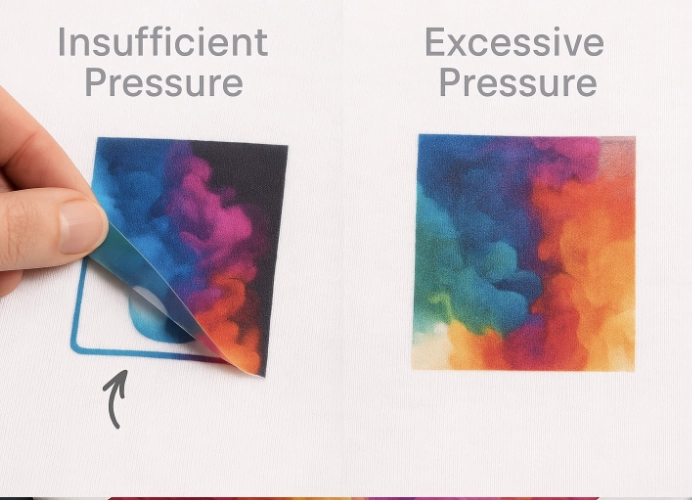
If the pressure is too low, the ink will not fully penetrate the fibers, and the adhesive will not bond properly with the fabric fibers, leading to peeling.
On the other hand, if the pressure is too high, it may cause the ink or fabric fibers to deform, resulting in color distortion or creases, and the print may become distorted or leave marks on the fabric.
The DTF printing process consists of two main steps:
- Printing the design onto the DTF film using a DTF printer and specific ink.
- Transferring the printed film onto the desired material using a heat press.
The pressing step uses heat and pressure to melt the ink and adhesive on the film and bond them permanently to the fabric fibers.
Therefore, finding the right balance of pressure is crucial to achieving high-quality and durable DTF prints.
Factors Influencing the Selection of Appropriate Pressure
Setting the pressure does not follow a fixed formula but depends on several factors that need careful consideration.
1. Types of Fabric and Materials
Each material has different properties in terms of pressure resistance.
While each machine and material may have different values, generally for DTF work, medium to high pressure (40–60 PSI or 6–8 out of 10 on some machines) is recommended.
However, the choice of pressure should also consider:
Cotton: The most commonly used material, which can withstand higher pressure compared to polyester. It usually requires more pressure than polyester.
Polyester: A synthetic fiber with high flexibility. Excessive pressure may cause indentations or distorted prints. Medium pressure is recommended.
Blended Fabrics: Such as TC or CVC blends of cotton and polyester. Higher medium pressure is recommended.
Other Materials: Such as leather, canvas, or other rigid materials, require special pressure testing due to their unique properties.
2. Thickness of the Fabric
Thick Fabric: Such as canvas or towels, should use higher pressure to ensure heat and pressure penetrate the fibers thoroughly.
Thin Fabric: Such as chiffon or silk, should use lighter pressure to prevent damage to the fabric.
Thickness of the Garment – Thicker garments require more pressure than thinner ones to ensure the pressure reaches the fiber layers.
3. Type and Quality of DTF Film
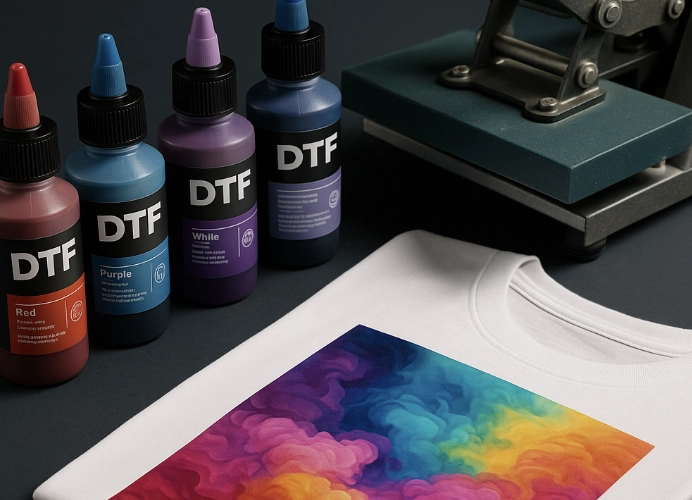
Each brand of DTF film has different quality and thickness. High-quality films usually have better adhesion properties. Testing with the film you regularly use will help achieve the best results.
Print Size – Large or full-area prints should use consistent pressure across the sheet.
4. Types of Heat Press Machines
Each model of heat press has different mechanisms for generating pressure.
Swing-away Press: Can distribute pressure more evenly.
Clamshell Press: Easy to use and space-saving, but the pressure may not be as consistent, especially around the edges.
Techniques for Setting the Right Pressure for DTF Work
Setting the pressure on a heat press is generally divided into three main levels: Light, Medium, and Heavy.
Light Pressure: Suitable for very delicate materials such as silk or highly flexible materials to prevent surface marks.
Medium Pressure: Standard pressure used for most fabrics, such as polyester or high-polyester blends.
Heavy Pressure: Suitable for thick and sturdy fabrics like heavy cotton or canvas, or for printing on hard materials to ensure the adhesive melts and adheres completely.
The Relationship Between Pressure, Temperature, and Time
Pressure is not the only factor affecting the durability of DTF work; it must work in conjunction with:
Heat Press Temperature – Typically between 150–160°C
Heat Press Time – Usually 12–15 seconds
If the pressure is correct but the temperature or time is insufficient, the adhesive powder may not fully melt. Conversely, if the temperature is too high, the ink may burn or fade.
Tips for Testing Pressure Yourself
The best way to find the right pressure is to “test.”
Start with medium pressure: Set the pressure to medium and test on a small sample first.
Check the results: After the first press, try peeling off the film and observe the adhesion of the print.
Adjust and retest:
If the print feels too loose or peels off easily: Increase the pressure to heavy.
If the print is distorted or there are marks on the fabric: Decrease the pressure to light.
Keep notes: Once you find the right pressure and time for each material, document it as a personal guide for future use.
Tips for Adjusting Pressure Properly
Test with actual shirts before mass production.
Try pressing at different pressures, such as Medium / Medium High / High, and then wash test.
Check the heat press manual; each model may have different pressure measurement systems, such as PSI, kg/cm², or numerical levels.
Use pressure test paper to see if the pressing area has consistent pressure.
Check the fabric and film; if some areas peel off easily, it may be due to inconsistent pressure.
Signs that you are using improper pressure:
Too little pressure: The print lifts or peels at the edges after a few washes.
Too much pressure: Clear marks around the print or color distortion from squeezing.
Inconsistent pressure: Some areas adhere well, but others peel off easily.
Techniques to Prevent Peeling Even with Proper Pressure
Use high-quality DTF ink and standard adhesive powder.

Check the fabric cleanliness before pressing; free from dust or moisture.
Store DTF film in a dry place away from sunlight to prevent ink degradation.
Choose a heat press with a smooth and even pressure distribution plate.
High-quality DTF printing does not solely depend on the most modern equipment but on a meticulous understanding and control of every step, especially “proper pressure,” which is a crucial factor determining the durability of the work.
Investing time to test and understand the properties of the materials and equipment you use will help reduce peeling issues, minimize losses, and enhance the reliability of your work sustainably.
Proper pressure in DTF work significantly affects the quality and durability of the print. Finding the right value requires considering the fabric type, thickness, temperature, time, and material quality. Paying attention to adjusting the pressure correctly will make your DTF work adhere firmly, withstand washing, and look as good as new for a long time.
Proper pressure, combined with the right temperature and time, is the secret formula that will make your DTF work perfect, durable, and impressive in every piece.
Ready to Print Custom DTF with Screen168 Bangkok?
Single pieces to bulk wholesale. Free artwork file check and instant online pricing 24/7.
🚀 View Sizes, Prices & Order Online→