
White vs Black DTF Adhesive Powder: Just Color or Hidden Features?
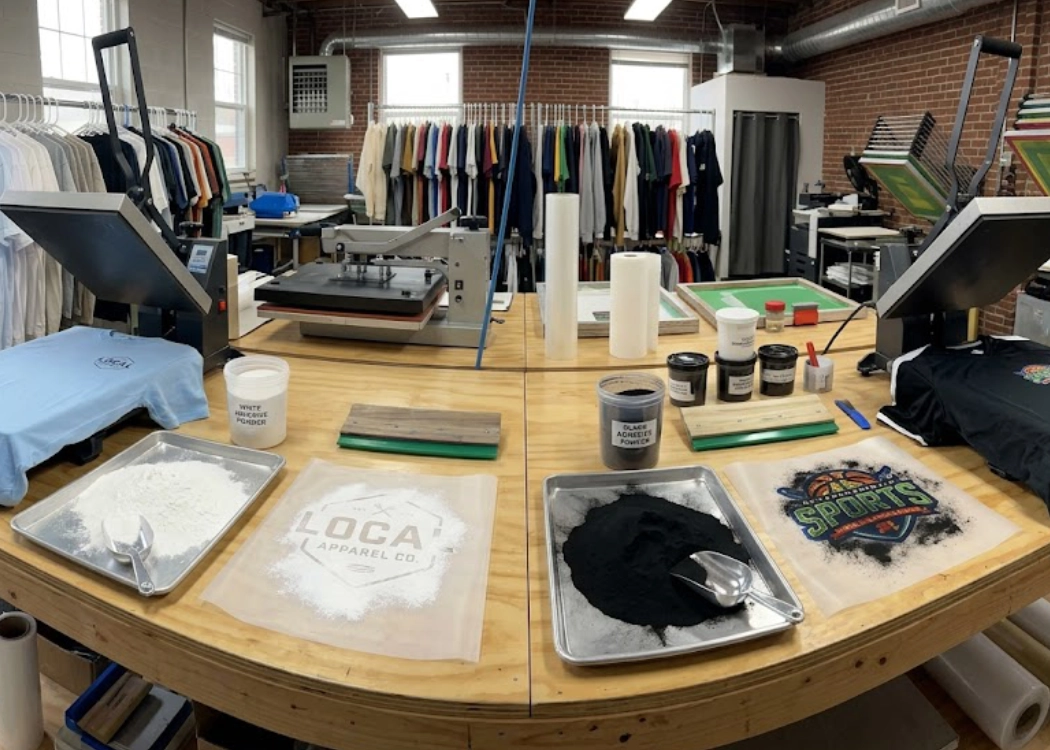
For those in the screen printing shop industry, especially those who are passionate about DTF (Direct to Film) printing technology, it is well known that apart from the printer, printhead, and ink quality, another crucial factor that determines whether the print will be durable, beautiful, and not peel off is the “Hot Melt Powder”.
When ordering DTF hot melt powder, you often see two main options: white hot melt powder and black hot melt powder. Common questions that arise include, “Are they just different colors?” or “Can they be used interchangeably?” Today, Screen 168 will delve into the true characteristics of both types of powder to help you choose the right one for your projects and elevate the quality of your screen printing to a professional level.
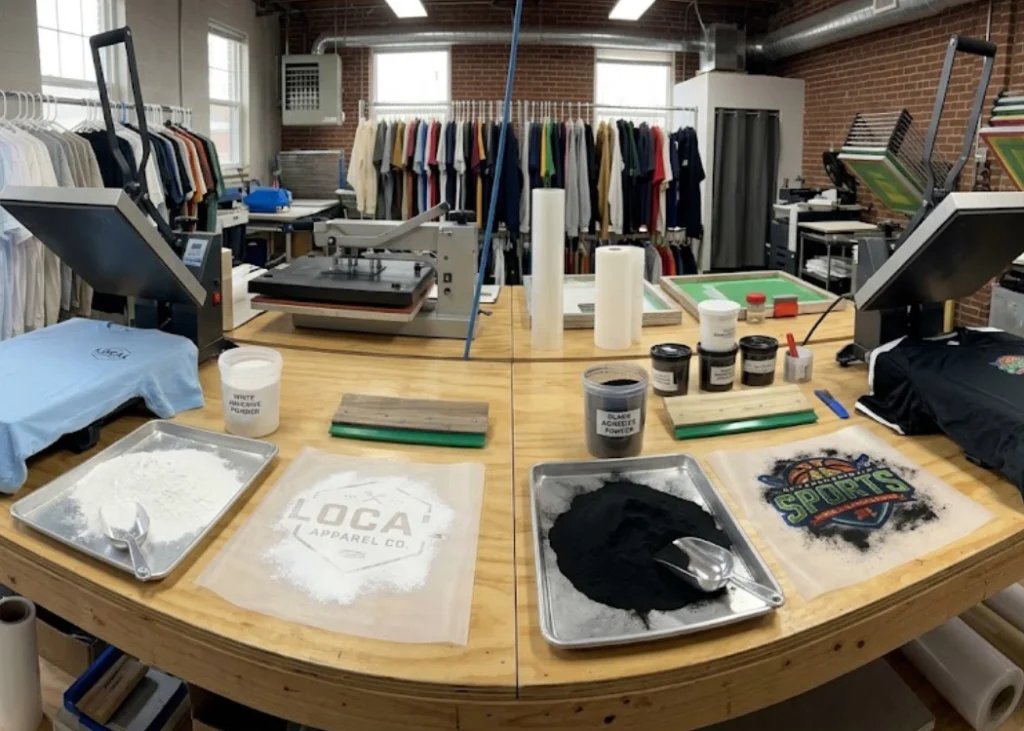
Understanding DTF Hot Melt Powder
Before we look at the differences, let’s review the primary function of hot melt powder. In the DTF system, hot melt powder acts as a “bonding agent” between the ink layer (printed on the film) and the fibers of the garment. When the hot melt powder is heated in an oven, it melts and coats the ink layer, and when heat pressed onto the garment, the melted powder seeps into the fibers, ensuring that the print adheres firmly, flexibly, and is durable through washing.
Now, let’s see what secrets the different colors of hot melt powder hide.
White DTF Powder: The Universal Standard Every Shop Needs
White hot melt powder is the most popular and widely used type in screen printing shops.
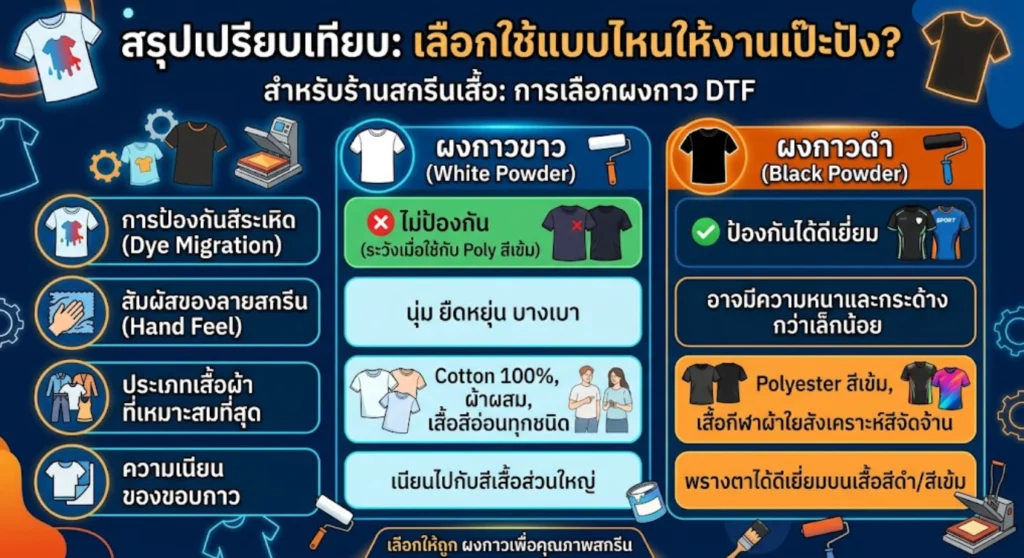
Key Features of White DTF Powder: High Flexibility: Provides a soft hand feel, making the print less stiff and more flexible to the touch.
Transparency When Melting: When heat pressed onto the garment, white hot melt powder melts and blends with the ink and fabric, resulting in a smooth edge that does not leave residue.
Universal Use: Can be used on a variety of garment colors, from light to dark, and on different fabric types, including cotton, polyester, or blends.
Easy to Melt: Has a standard melting point, making it easy to bake and press, with temperature control being straightforward.
Ideal For: General screen printing, 100% cotton t-shirts, light-colored shirts, black shirts, or projects requiring thinness and a soft feel.
Black DTF Powder: The Hero Solving the “Dye Migration” Problem
Many people misunderstand that black hot melt powder is only used for pressing onto black shirts to blend in, which is merely a side benefit. The true characteristic and primary reason for the creation of black hot melt powder is to prevent the “Dye Migration” problem.
When printing light or white colors on dark synthetic fabrics (polyester) such as sports shirts or jackets, the heat from pressing can cause the dye in the polyester fibers to “migrate” (turn into gas) and rise up to mix with the DTF white ink layer, turning your white print pink (if printed on a red shirt) or a dull gray (if printed on a black shirt).
Key Features of Black DTF Powder: Dye Migration Blocker: Black hot melt powder contains carbon-based compounds or special chemicals that act as a “protective shield,” blocking the gas from the polyester dye from rising up and damaging the white ink layer. This ensures that the printed image remains bright and true to color.
Smooth Edge on Dark Garments: If there is a slight overflow of adhesive at the edges of the print, using black hot melt powder on dark or dark-colored garments will better conceal the edges compared to white hot melt powder.
Slightly Thicker Consistency: To create a strong layer to block dye migration, some grades of black hot melt powder may have a slightly thicker or stiffer feel compared to white hot melt powder.
Ideal For: Dark sports shirts (polyester), softshell garments, vibrant spandex fabrics, or fabrics with a high risk of dye migration.
Conclusion
White and black hot melt powder are not just different colors but are designed to solve different material engineering problems. As a DTF screen printing shop owner, having white hot melt powder as your primary tool for general work is essential. However, having “black hot melt powder” in your workshop will help you confidently handle orders for sports shirts or dark polyester garments, eliminating worries about dye migration ruining your work.
Choosing the right materials not only helps reduce defects but also elevates the quality standards of your screen printing, impressing customers with vibrant, durable, and professional results.
Ready to Print Custom DTF with Screen168 Bangkok?
Single pieces to bulk wholesale. Free artwork file check and instant online pricing 24/7.
🚀 View Sizes, Prices & Order Online→