
How to Stretch Muscles to Avoid Fatigue After Standing All Day Screen Printing
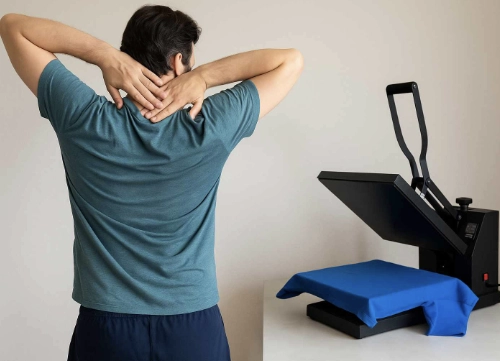
Maintaining Health While Screen Printing
Most screen printers have to stand and work all day, almost every day, which puts a lot of strain on various muscles. Therefore, it’s important to maintain your health and care for your muscles to prevent tension buildup in different parts of your body. However, it’s crucial to do so correctly to ensure your muscles receive proper care.

First, it’s essential to understand why you feel back pain when standing and screen printing.
Screen printing is a job that requires standing in one place for several hours, repeating the same motions over and over, especially during the heat pressing process (where you press the printed image onto the garment, in DTF printing, this involves pressing the printed file onto the film and then onto the garment). The repetitive nature of the work, combined with the need for precision, makes it difficult to move away from the work area. Performing the same motions without changing your posture, such as bending slightly, lifting your arms at the same angle, or standing still for long periods, can lead to muscle fatigue and strain in specific areas. If left unattended, this can result in chronic pain conditions like tendonitis, lower back pain, or myofascial pain syndrome, which can have long-term health impacts. Therefore, it’s crucial to take care of your muscles from the very beginning of your work.
Muscle areas commonly affected by screen printing:
- Neck and shoulders: From bending your head down to look at the work or tilting your head back.
- Lower back: From standing in the same position for long periods.
- Thighs and calves: From standing for long periods without moving.
- Arm and shoulder muscles: From repeatedly lifting your arms while printing or arranging garments.
It’s clear that multiple muscle areas are affected, so specific stretching exercises are necessary for screen printers.
Neck and Shoulder Stretches
Exercise 1: Slowly tilt your head to one side until you feel a stretch in your shoulder. Hold for 20 seconds and then switch sides.
Exercise 2: Tuck your chin towards your chest and use both hands to gently press the back of your head, increasing the stretch.
Repeat: 3 times a day or whenever you feel sore.
Shoulder and Arm Stretches
Exercise 1: Cross your right arm over your chest and use your left hand to press it towards your chest, hold for 20 seconds.
Exercise 2: Raise your hands above your head, bend your elbows, and touch the middle of your back with your hands. Use your other hand to gently press your elbow.
The benefits of these exercises include reducing shoulder and arm tension caused by repetitive motions during heat pressing, helping muscles relax.
Lower Back Stretches
Exercise 1: Sit on a chair, slowly bend forward to touch the floor, allowing your head to fall between your knees.
Exercise 2: Cat-Cow Pose – On all fours, arch and round your back in rhythm with your breathing.
For these exercises, it’s recommended to do them before and after work to prevent cumulative pain. Be cautious and careful to avoid injury, as incorrect form can lead to muscle strain. If unsure about the correct form, consult a professional for guidance.
Hip and Thigh Stretches
Exercise 1: Sit with your right leg crossed over your left knee, gently press your right knee to feel a stretch in your hip.
Exercise 2: Stand facing a wall or table, step one leg back, and stretch your calf while holding the position.
These exercises help reduce thigh tension after standing for long periods and improve blood circulation.
It’s clear that specific stretching exercises target different muscle areas to reduce tension. Regular and correct stretching is essential for long-term muscle health.
Additional Tips for Screen Printers
In addition to stretching, another often overlooked aspect is footwear. Screen printers should wear supportive shoes that support the arch and have shock-absorbing soles to stand comfortably throughout the day. Choosing shoes that fit your foot shape can help reduce muscle injuries.
After selecting the right shoes, adjust your work posture. Start by adjusting the height of your table to a level where you don’t have to bend your back too much and can extend your arms straight.
Set a timer to change positions every 45 minutes, take short walks, or stand up to stretch your arms and legs to break the monotony.
Use an anti-fatigue mat to help reduce pressure on your heels and back.
Stretching is a long-term investment.
Don’t think of stretching as just a temporary relief for soreness. While some may feel it’s unnecessary, stretching is crucial for screen printing as it helps maintain your muscle and bone health over the long term. Consistent self-care can improve your work performance, increase focus, and prevent chronic pain that might force you to stop working in the future.
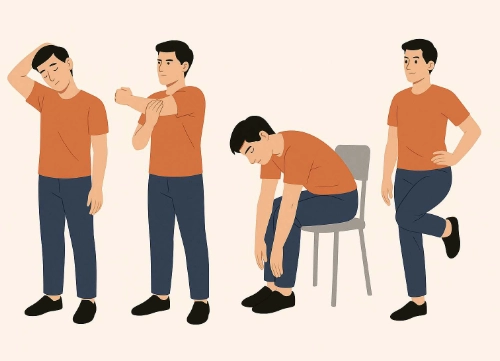
Illustrations of Exercises
Exercise 1 (leftmost): Neck stretch – Tilt your head to one side with a hand assisting.
Exercise 2: Shoulder stretch – Pull your arm across your body.
Exercise 3: Back stretch – Bend forward from a seated position to touch your toes.
Exercise 4 (rightmost): Hip stretch – Cross one ankle over the opposite knee and stand balanced.
Each exercise is low-risk if done slowly and within a comfortable stretch range, suitable for those who stand for long periods, such as screen printers.
Ready to Print Custom DTF with Screen168 Bangkok?
Single pieces to bulk wholesale. Free artwork file check and instant online pricing 24/7.
🚀 View Sizes, Prices & Order Online→