
DTF T-Shirt Printing: Eco-Friendly or Not?
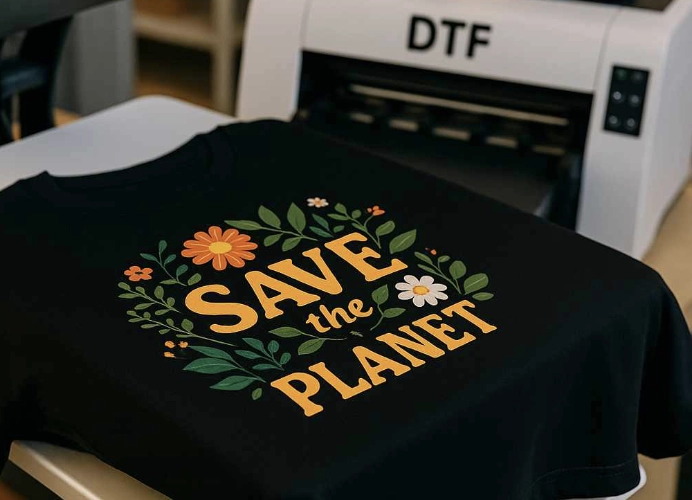
In today’s era, consumers are increasingly concerned about sustainability. Businesses across all sectors are rapidly adapting to align with eco-friendly concepts by trying to reduce unnecessary waste and using materials that have minimal environmental impact. This includes the printing and fashion industries, particularly the trend of eco-friendly t-shirt screen printing which is gaining significant attention to meet consumer demands and reduce environmental impact.
One of the screen printing technologies that has been frequently discussed in recent years is the DTF (Direct to Film) printing system. This system is a new technology for printing t-shirt designs (the process involves printing the image onto a film, then applying adhesive and heat pressing it onto the shirt). It is seen as a potential new option for clothing brands looking to adapt to environmentally conscious consumers. Today, we will delve into whether DTF screen printing is truly environmentally friendly? How can we leverage DTF to help mitigate climate change?

Understanding the DTF T-Shirt Printing System and Its Environmentally Friendly Working Method
Before discussing whether DTF is environmentally friendly, it’s important to understand what DTF is? One must first comprehend the working system of DTF. The DTF (Direct to Film) printing system differs from other screen printing systems because this system prints the design onto a special film using DTF-specific ink. Then, it is dusted with a powder adhesive and pressed onto the fabric or other materials (such as cloth bags) using a heat press. Although it may seem like there are only a few steps, each step involves numerous materials for printing.
The first advantage of the DTF printing system is that it is not limited to the type of fabric. It can print t-shirts of various types, such as cotton, polyester, or mixed fabrics, which differs from the DTG (Direct to Garment) or traditional screen printing systems that have more limitations.
The DTF screen printing system is gaining popularity in many countries, from small businesses to large garment factories, as it efficiently handles small print jobs and can produce large quantities with consistent quality from the first to the last item. Let’s see how DTF helps in environmental conservation:
-
Reduction of Production Waste (Waste Reduction) In the past, traditional t-shirt printing methods like silk screen printing required separate printing blocks for each color. If there was a minor mistake, the entire block had to be discarded, and the blocks had to be cleaned with chemicals that cannot be recycled. However, DTF does not require blocks or separate layers of ink. With a ready-to-print file, digital printing can be done immediately, significantly reducing plastic and chemical waste from the old process (reducing the various chemical steps used in block making and exposure).
-
Low Water Usage Traditional t-shirt printing and fabric dyeing processes often use large amounts of water for cleaning blocks, washing ink, or dyeing. Naturally, chemicals are used for cleaning, which pollutes the water used, affecting the water ecosystem as chemicals often flow into rivers and streams. However, the DTF system does not use a cleaning process and does not use water in the production process (except for minimal water used for cleaning the print head), significantly reducing water usage and chemical waste.
-
Printing Only When Ordered, Reducing Waste from Excess Inventory DTF t-shirt printing supports on-demand printing or “print-on-demand,” printing only the number of orders received. This helps reduce overproduction (producing excess inventory that cannot be sold and ends up as waste). Many clothing brands choose DTF for printing special edition t-shirts because they can print designs based on actual orders and maintain consistent quality across all items. This allows for resizing the print to fit the shirt size without affecting the image quality, resulting in no excess inventory and no wasted clothing produced.
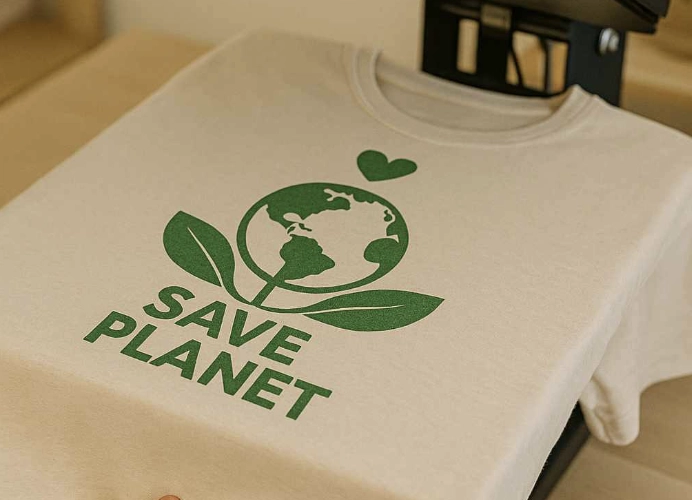
Limitations That Prevent DTF from Being 100% Environmentally Friendly
Despite the fact that printing shirts with DTF technology is not yet 100% environmentally friendly, the DTF screen printing process does help reduce waste in various stages of production. Why is it not 100%?
-
DTF Ink is Still Chemical-Based: The ink used in DTF systems is mostly water-based pigment ink, which has the advantage of containing fewer VOCs (Volatile Organic Compounds) compared to solvent ink. However, it still requires certain chemicals and solvents to aid in adhesion, which can have environmental impacts if waste is not managed properly. At standard shirt printing shops like Screen168, we have well-managed systems, including machines and exhaust pipes, with engineers monitoring operations to minimize environmental impact.
-
DTF Film is Still Plastic: The film used for DTF printing is made of PET plastic (Polyethylene Terephthalate). While it is durable and can be reused in some cases, in the normal printing process, the film is cut after printing, and the leftover pieces become post-use waste. Some factories attempt to recycle PET film, but the separation and recycling processes are not widely adopted in the industry.
-
DTF Adhesive Powder is Mostly Made of Polyurethane (PU): The DTF adhesive powder used to help ink adhere to fabric during the shirt-making process is primarily composed of PU, a substance that is not biodegradable and takes hundreds of years to decompose. Currently, there are no 100% biodegradable alternatives that meet market needs, but in the future, there will likely be production processes that further elevate the eco-friendliness of the shirt screen printing industry.
The Role of Screen Printing Shops in Developing towards Green Technology
Summarized, despite limitations, DTF (Direct-to-Film) technology for shirt printing is increasingly aligning with “Green Technology.” Some companies are researching ink made from natural materials to reduce harmful chemicals and minimize environmental pollution. Recyclable film is becoming easier to recycle, with some brands developing DTF film made from 100% recycled plastic or biodegradable plastic, which will significantly reduce plastic waste in the shirt printing process in the future.
Proper waste management systems are also crucial. Businesses using DTF should have systems to separate plastic waste and chemical waste for proper recycling, which will genuinely reduce environmental burdens in the long term.
In-depth comparison: How is DTF shirt printing safer than traditional silk screen printing?
Looking back at the traditional shirt printing industry, especially traditional silk screen printing that uses plastisol ink, this type of ink typically contains PVC and phthalates to make the color flexible and adhere well to fabric. These chemicals are known to be difficult to break down, harmful to the environment, and may cause irritation to wearers. When printing shops clean their screen blocks, these residual chemicals often contaminate wastewater.
In contrast, DTF printing primarily uses water-based pigment ink, which is free from PVC and heavy metals. Although the DTF printing process requires adhesive powder and film, compared to the amount of harmful chemicals released into the environment, DTF is much more environmentally friendly and safe for both workers and wearers.
Meeting the New Fashion Trends (Eco-Conscious Consumers)
The behavior of today’s consumers, especially Gen Z and Millennials, does not solely base their clothing purchases on aesthetics but also on the “origin” of the product. They are willing to support brands that stand for environmental issues and oppose fast fashion, which generates massive waste.
Choosing to use shirt printing technology like DTF has become a market strength (selling point) that clothing brands can communicate to their customers. Brands can promote that every piece is produced on demand, with no excess production, and uses safer ink. Additionally, DTF can print designs on organic cotton or recycled fiber fabric excellently, allowing brands to create a 100% eco-friendly collection from fabric to printed design.
The Future of Eco-Friendly Materials in the DTF T-Shirt Printing Industry
The printing technology industry has never ceased to evolve, aiming to eliminate the issue of plastic waste from PET film sheets. Currently, leading global manufacturers are researching and beginning to test “water-soluble DTF film” and “bio-based film” that can naturally decompose more quickly. Additionally, they are developing adhesive powders derived from natural polymers.
Although these technologies may still be expensive and in their early stages, they clearly signal that the t-shirt printing industry is moving towards becoming a fully green industry in the near future. Soon, t-shirt printing shops and businesses will have the option to use materials that truly meet the criteria of zero waste.
Eco-Friendly T-Shirt Printing with DTF: A New Option for Sustainable Fashion Brands
While DTF is not yet a “zero waste” or completely environmentally friendly printing system, it is a valuable and fitting choice for clothing brands aiming to enter the sustainable fashion market. This is because it helps reduce unnecessary production, decrease water and harsh chemical usage, and increase flexibility and support for personalized production (customization). Modern consumers want clothing that is not just “beautiful” but also “kind to the planet.”
Choosing to do eco-friendly t-shirt printing is an investment in a sustainable future for all fashion businesses. While eco-friendly printing may not be the ultimate 100% environmentally friendly solution, it is a significant step forward from older technologies in many ways. At the very least, it helps reduce chemical processes. If businesses and t-shirt printing shops choose to use environmentally friendly materials, manage production processes cleanly, and pay attention to waste management systems, DTF can be a good helper in an era where the world is moving towards green production.
Ready to Print Custom DTF with Screen168 Bangkok?
Single pieces to bulk wholesale. Free artwork file check and instant online pricing 24/7.
🚀 View Sizes, Prices & Order Online→