
Pros and Cons of DTF Printers: What You Should Know
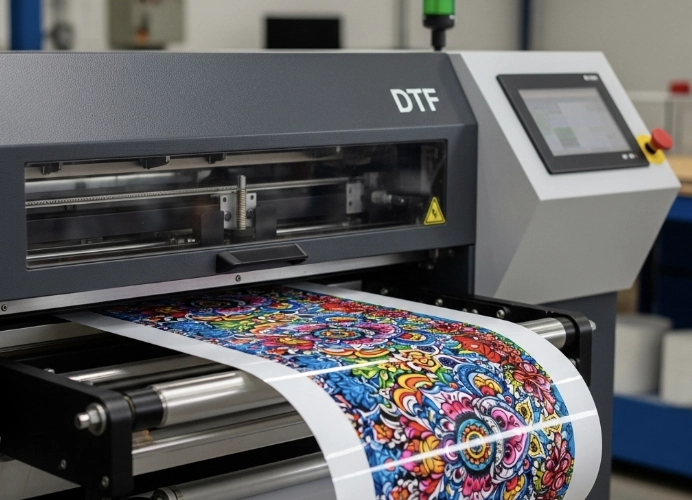
In an era where the fashion business and personalized branding (Customization) are rapidly growing, the technology for printing patterns on clothing and various materials is also advancing continuously.
One of the emerging technologies that is gaining significant attention from entrepreneurs is the DTF (Direct to Film) printer. Why is it so popular? This is due to several outstanding features that present investment opportunities. However, before making a decision to invest, it is crucial to thoroughly research the information, especially the pros and cons of DTF printers to ensure that the investment is worthwhile and truly meets the needs of the business. Whether the screen-printing work that needs to be taken on is suitable for this system is another important consideration.
This article will delve into every aspect you should know before investing in DTF printers, covering both the advantages and disadvantages to help you make a confident decision.
Introduction to DTF Printers (What is a DTF Printer?)
A DTF printer, or Direct to Film printer, is a digital printing technology that prints images onto a special film (PET Film). The printed film is then coated with adhesive powder and heated to melt the powder, which adheres to the ink. Once the adhesive powder dries, the film is heat-pressed onto the desired material, such as clothing (cotton, polyester, blends), leather, wood, or even ceramics, ensuring the printed design adheres permanently to the surface.
The main advantage of DTF is its ability to print on a wide variety of colored and textured materials, with fewer limitations compared to other production methods, especially dark fabrics where other printing technologies may have limitations. This makes DTF an attractive option for businesses seeking production flexibility or focusing on diverse fabric types.
Advantages of DTF Printers (Advantages of DTF Printers)
The rapid popularity of DTF printers in the screen-printing and premium product industries stems from several key benefits that meet the demands of the modern market, as follows:
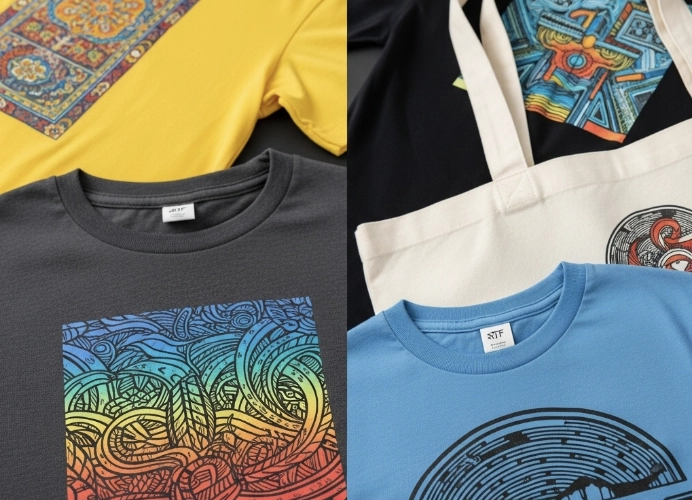
Versatility in Materials and Applications:
This is the greatest strength of DTF printing, as it can screen print on almost any fabric type, including 100% cotton (Cotton), polyester (Polyester), blends, spandex (Spandex), nylon (Nylon), faux leather (PU), genuine leather, and other smooth materials without needing to use specific ink for each fabric type (though it is recommended to use high-quality ink, which is much more durable than low-quality ink). Additionally, it can print on garments of any color, both light and dark, with vibrant and sharp colors. This is a significant advantage of DTF printers that some other systems cannot achieve.
High Print Quality with Vivid Colors and Sharp Details:
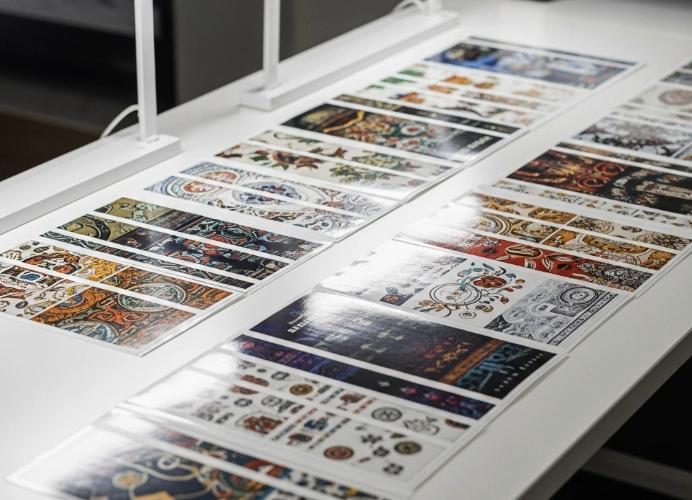
DTF printers provide high-resolution print quality, excellently capturing the fine details of designs as they are directly printed from a computer. The colors are vivid, rich, and true to the original design because the printing is done on a film first before being transferred to the material, which prevents the ink from sinking directly into the fabric as in other printing systems. This ensures that the colors do not fade and remain consistent. It allows for quality checks before transferring to the garment, providing high clarity and vibrant colors, with patterns that do not easily peel off or fade quickly. It supports professional printing work, suitable for customers seeking high-quality work.
Outstanding Print Durability:
Prints from DTF machines are highly durable and can withstand multiple washes in a washing machine while maintaining their vibrant colors without fading or peeling easily (though proper washing techniques will help preserve the screen-printed design longer). This is due to the ink and adhesive powder that melt together and adhere excellently to the fabric fibers, making it suitable for everyday use.
No Pre-treatment Required for Most Fabrics:
Unlike DTG (Direct to Garment) printing technology, which usually requires fabric pre-treatment, especially for dark-colored fabrics, adding extra steps and costs, as well as longer screen printing times, DTF can print directly onto film and then transfer it to the material, reducing the complexity of the workflow and saving a lot of time.
Suitable for Small to Medium Volume Jobs and On-Demand Printing:
DTF printers are ideal for businesses that handle print-on-demand orders or small to medium volume production, as they do not require screen making. Different design prints can be produced without additional setup costs for each design, allowing for multiple screen changes. This is suitable for businesses with low order volumes or custom work, as it can print as little as one piece without setting up screens or incurring additional labor costs.
Relatively User-Friendly Workflow:
Although there are several steps involved in printing onto film, applying powder, and baking, compared to traditional multi-color screen printing, DTF has a simpler and easier-to-learn process, requiring fewer personnel to manage. Using a DTF machine takes little time, enabling quick turnaround for rush orders, meeting the demands of modern customers who require speed.
Easier Maintenance Compared to DTG Systems:
There are fewer clogged nozzle issues compared to direct garment inkjet systems, and some parts can be replaced by the user. However, users should have a certain level of knowledge about the printer system they are using in their store.
Disadvantages of DTF Printers
While DTF printers have many advantages, there are limitations and disadvantages that business owners should consider before investing.
Significant Initial Investment:
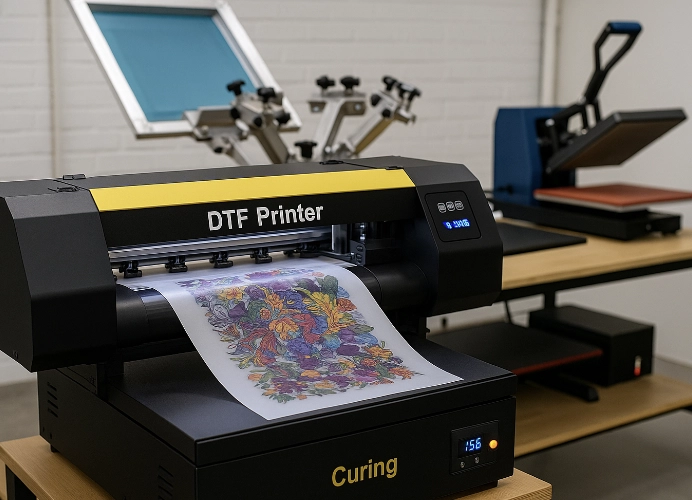
The cost of a DTF printer along with related equipment such as a powder shaker and curing unit or a dedicated oven, and initial consumables (ink, film, powder adhesive) is quite high for small business startups. It is important to carefully consider the payback period.
DTF printing requires specific ink, DTF film, high-quality powder adhesive, and a standard curing unit. Using low-quality materials can affect the print quality and durability of the work. Therefore, finding the right combination of these three components for optimal performance may take some time.
Regular Maintenance Required:
DTF printers, particularly the printhead, require consistent maintenance to prevent clogging issues caused by white ink or other types of ink. Neglecting maintenance can lead to costly repairs, sometimes necessitating printhead replacement. Additionally, handling powder adhesive can create messiness in the workspace if there is no proper management system in place.
Print Size Limitations:
The maximum print size is limited by the printer’s width and the film, which generally may not be suitable for very large print jobs such as full-body prints or large advertising signs compared to traditional screen printing technology.
Production Speed for Bulk Orders:
For large-scale single print jobs (hundreds or thousands of pieces), DTF printers may have a slower overall production speed compared to traditional screen printing, which can quickly replicate after setting up the block. However, the quality of the prints will be consistent across all images because the DTF system operates through computer commands.
Requires Knowledge and Skills to Work (Learning Curve):
Users need to learn and understand the entire workflow, from preparing design files, setting up the printer, managing colors, applying powder adhesive, controlling temperature and time for heat pressing, to maintaining the machine, to achieve consistent print quality.
Understanding color management and profiles is crucial; without knowledge of the ICC color system or print settings, the prints may have color discrepancies, not match the screen, or differ from the customer’s file during production.
DTF ink is sensitive to humidity; if the room temperature is not controlled or there is poor maintenance, it may cause clogged print heads or inaccurate colors.
Environmental Concerns:
The DTF process generates waste from used PET film sheets and excess powder adhesive. Although there are now more environmentally friendly materials, it remains a concern for businesses focused on sustainability.
DTF powder can disperse in the air if there is no dust extraction system or if employees do not wear masks, potentially affecting health over time. Installing an air filtration system or air purifier in the printing room is recommended.
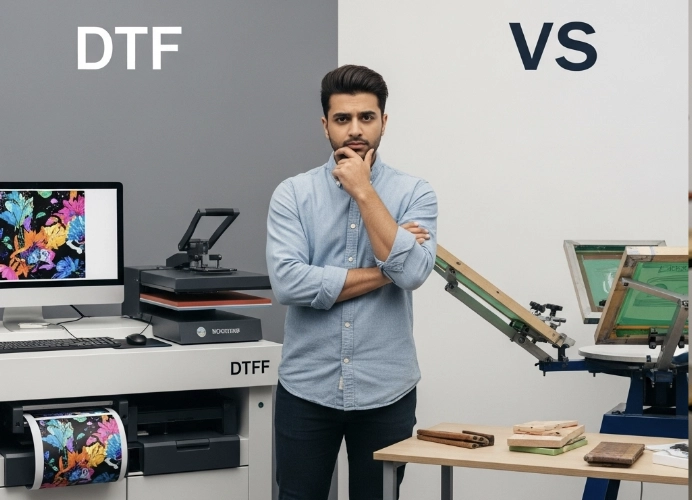
Who is Suitable for Investing in DTF Printers?
Based on the advantages and disadvantages mentioned above, the following groups of businesses or individuals may be suitable for investing in DTF printers:
Small to medium-sized screen printing businesses: Those requiring flexibility in handling various design jobs, printing on multiple types of fabrics, and taking on small batches of orders per design.
Entrepreneurs producing customized products: Such as team shirts, class shirts, gifts, and event merchandise.
Online stores selling fashion clothing or printed goods: Those needing to control production themselves and quickly create new products.
Businesses looking to expand their printing capabilities: From having other printing systems and wanting to add DTF to meet the increasingly diverse customer demands.
Individuals looking for a supplementary business or a hobby that generates income: With a clear business plan and marketing strategy.
If you choose quality materials from a reliable supplier, such as a store that provides DTF film, DTF ink, and standard adhesive powder, you can start your business confidently and safely.
Summary: Weigh the Pros and Cons Before Investing in a DTF Printer
DTF printers are high-potential technology that offers new opportunities for businesses in the printing industry, with advantages in material versatility, print quality, and durability. However, the investment comes with high initial costs and the need for regular maintenance, along with certain limitations to consider.
Before deciding to invest in a “DTF printer,” the most important thing is to assess your business needs, budget, target market, expected workload, and readiness to learn and maintain the system thoroughly. Studying information, comparing different models, consulting actual users, or even trying DTF printing services from other sources first, will help you make a confident decision that brings worthwhile and sustainable returns for your business.
Understanding both the advantages and disadvantages of DTF printers will be the key to confidently stepping into the world of DTF printing and being prepared for success.
Many people might wonder whether they should invest in a DTF printer or not?
The answer depends on your business goals.
If you want to start a custom t-shirt printing business, have a diverse customer base, and need flexibility, DTF is an excellent choice.
If you focus on large volume production runs or emphasize direct-to-garment (DTG) work, you may need to consider other options as well.
Ready to Print Custom DTF with Screen168 Bangkok?
Single pieces to bulk wholesale. Free artwork file check and instant online pricing 24/7.
🚀 View Sizes, Prices & Order Online→