
DTF Ironing Techniques for Sports and Umbrella Fabrics: Long-lasting and Peel-resistant
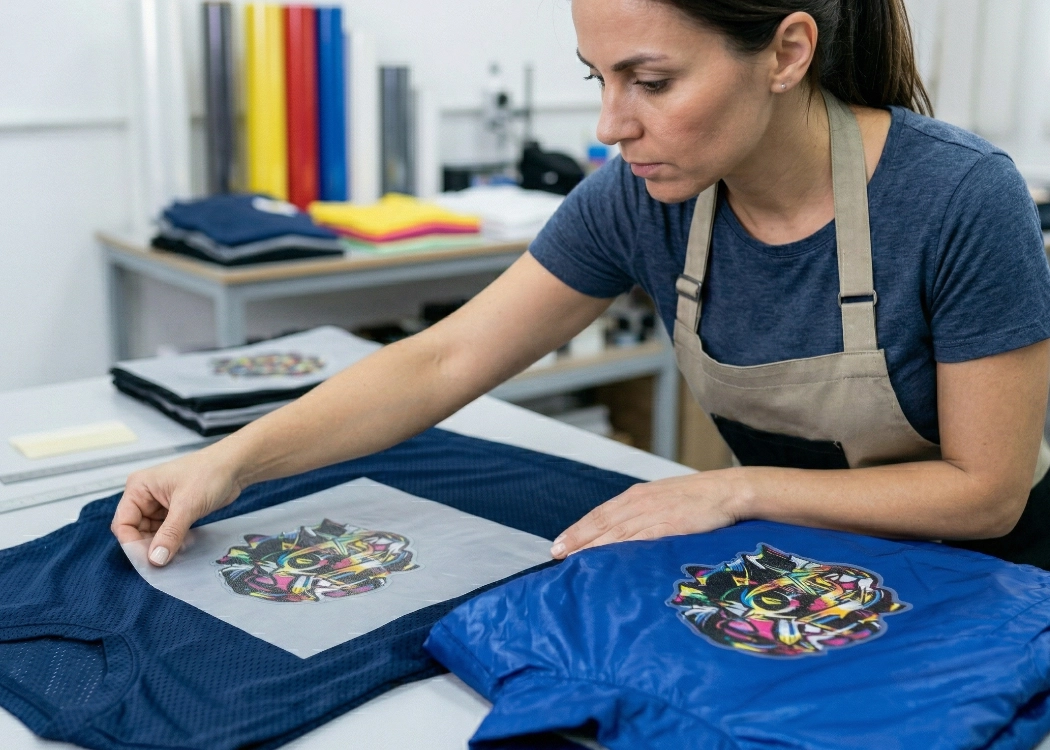
Revolutionizing T-Shirt Printing with DTF Technology
In the world of modern T-shirt printing, DTF (Direct to Film) technology has brought about a revolution with its ability to produce sharp, vibrant prints easily without the need for traditional silk screens. While many are familiar with the ease and excellent results of DTF printing on cotton, the real challenge for print shops lies in printing on other fabric types, particularly polyester and nylon/synthetic fabrics.
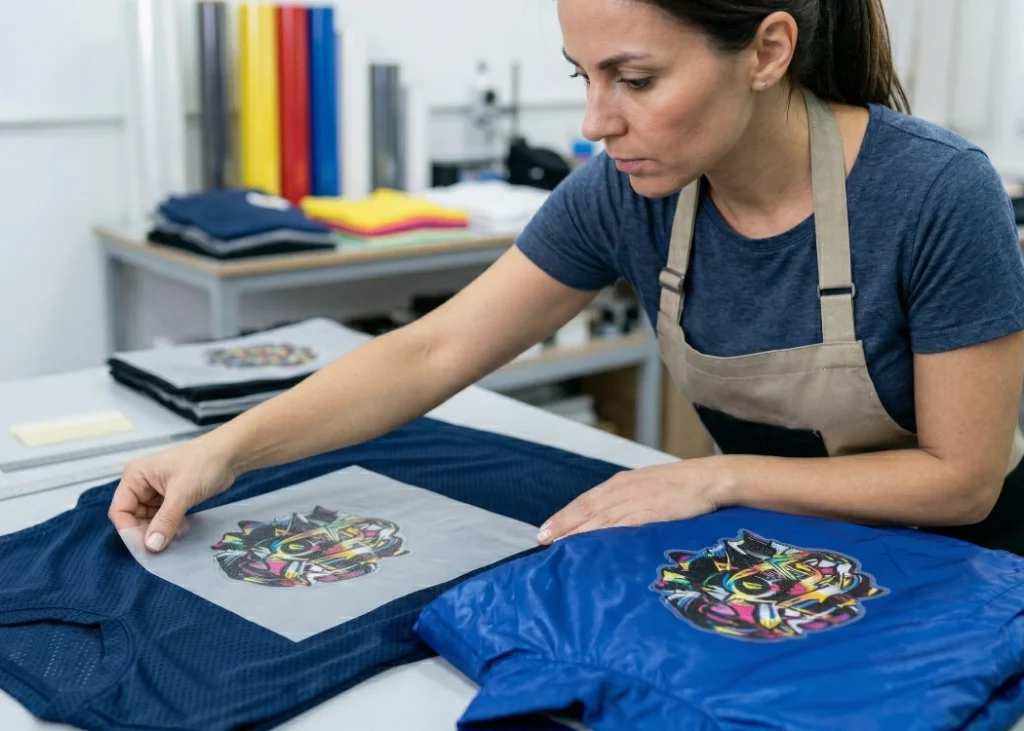
These fabrics have properties vastly different from cotton, including flexibility, heat resistance, and a surface often coated with water repellent substances. Using traditional techniques can result in nightmares such as prints peeling off after a few washes, fabric bleeding through the print, or the fabric shrinking and losing its shape.
This article will delve into professional techniques and tips for printing DTF on polyester and nylon fabrics to ensure your prints are beautiful, durable, and impress your customers to the highest degree.
Why are polyester and nylon fabrics harder to print than cotton?
Before diving into techniques, it’s important to understand the challenges of printing on synthetic fabrics:
Low heat tolerance: Cotton can withstand high temperatures, but polyester and nylon fibers may melt, shrink, or scorch if exposed to excessive heat.
Dye migration: This is a major issue with polyester fabrics. The dyes used to color these fabrics can “bleed” or dissolve when exposed to heat, seeping through the DTF adhesive and onto the print, causing white prints to turn pink (if the shirt is red) or light blue (if the shirt is blue).
Coatings: Nylon fabrics are often coated with water repellent substances, which can block the DTF adhesive from adhering to the fibers, causing prints to peel off easily.
Advanced Techniques for Printing DTF on Polyester/Spandex Fabrics
Sportswear fabrics require high elasticity and breathability, so techniques must focus on adhesion without damaging fibers and preventing dye migration.
Required equipment:
Soft hand powder: If possible, use hot-melt adhesive powder designed for high flexibility to ensure prints stretch with the fabric without cracking.
Teflon sheet: Essential for distributing heat and preventing direct contact between the heat press and the fabric.
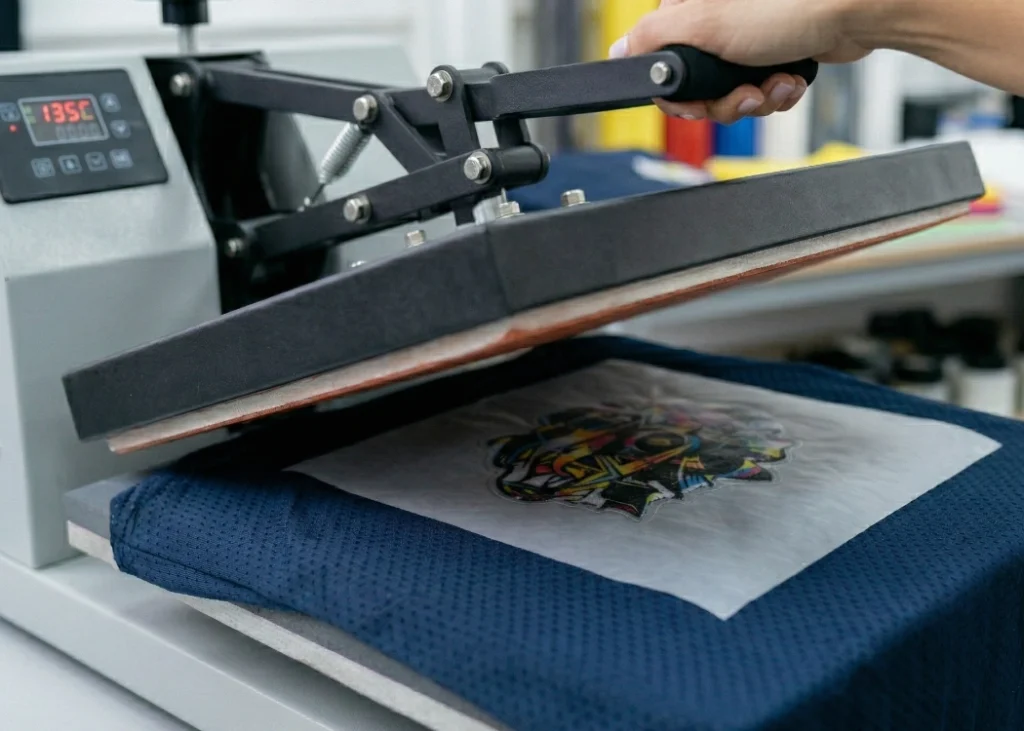
Steps for printing:
Temperature and time settings: This is crucial. For polyester fabrics, use temperatures lower than those for cotton, typically around 130°C - 140°C, with a time of about 10 - 12 seconds (adjust according to the specifications of the film and adhesive used). Lower temperatures help reduce the risk of fiber melting and dye migration.
Pressure: Use medium pressure, not as heavy as for cotton, to prevent fabric from getting heat press marks.
Film peeling: Always cold peel (peel when cold) for polyester fabrics to allow the adhesive to set and adhere fully to the polyester fibers before removing the film.
Post-press: After peeling the film, return the fabric to the heat press for a short time, about 5 seconds. This step helps press the adhesive deeper into the fibers and reduces the shine of the print, making it blend better with the fabric.
Mastering Nylon/Coated Fabrics with Advanced Techniques
Nylon fabrics are the ultimate challenge due to their smooth, often water-repellent surfaces, which make adhesion difficult. Techniques must focus on “breaking the shine” and using the right materials.
Required equipment:
Special adhesive powder: If you frequently print on nylon, use hot-melt adhesive powder specifically designed for nylon, which has better penetration through coatings.
Clean cloth/alcohol: For cleaning the printing area.
Steps for printing:
Pre-treatment: If the nylon fabric is heavily coated with water repellent, use a clean cloth moistened with mild alcohol to gently clean the printing area, helping to remove some of the coating (test on a fabric corner first to ensure alcohol does not damage the fabric color).
Pre-press: Nylon often retains moisture, so pre-press for about 2-3 seconds to remove moisture.
Temperature and time settings: Nylon has very low heat tolerance, so set the temperature to 120°C - 130°C and use a short time of about 8 - 10 seconds. Higher temperatures can cause the fabric to shrink or burn immediately.
Film peeling: Cold peel (peel when cold) is a strict rule for nylon fabrics. Wait until the film is completely cool before carefully peeling it off.
Post-press: Press through a Teflon sheet for 3-5 seconds to increase adhesion confidence.
Additional Tips for Successful DTF Printing on Synthetic Fabrics
Always test first: Never risk printing directly on a shirt. Use fabric scraps or sample shirts to find the optimal temperature, time, and pressure settings for that fabric batch.
Check film and adhesive quality: Use high-quality DTF film and adhesive powder. Low-quality adhesives often have adhesion issues with shiny and sportswear fabrics.
Care instructions: Advise customers to wash the shirts in cold water, inside out, and avoid using excessive fabric softener, as chemicals can damage the screen adhesive.
Printing DTF on polyester and nylon fabrics may seem daunting at first, but with the right techniques, appropriate materials, and practice, you can produce high-quality, durable, and beautiful prints that rival those on cotton. Expanding your printing capabilities to various fabrics can significantly increase your business opportunities and generate substantial revenue for your print shop.
Ready to Print Custom DTF with Screen168 Bangkok?
Single pieces to bulk wholesale. Free artwork file check and instant online pricing 24/7.
🚀 View Sizes, Prices & Order Online→