
How to Choose the Right Mask for Screen Printing to Safeguard Against Dust and Chemicals
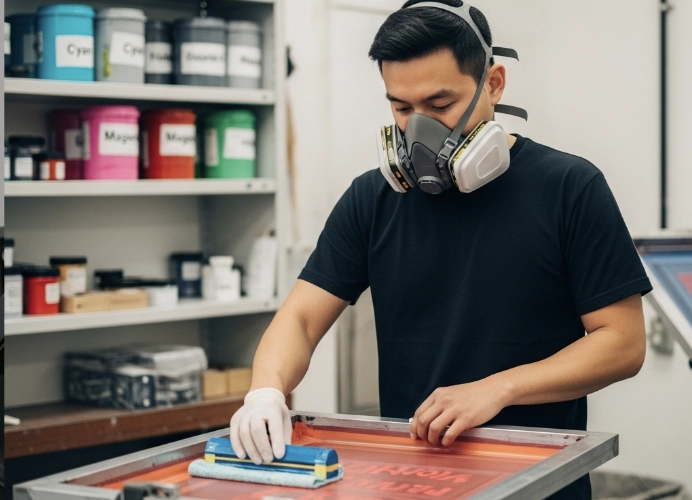
A mask for screen printing should protect against dust and chemicals; it is an essential tool for a quality screen printing shop.

For those in the screen printing industry, the smell of ink, the sound of a DTF heat press, or the image of a freshly cleaned screen are familiar elements of the creative process. However, hidden within this familiarity are “invisible enemies” in the air, such as chemical fumes, fine DTF adhesive dust, or ink particles dispersed in the atmosphere, all of which can have long-term health impacts on screen printers.
One aspect often overlooked is the “health of the screen printer” who faces dust, ink fumes, and hot press dust daily.
Wearing a “protective mask” is not just an option but a necessity for the profession. Everyone should wear a mask while working, but how do you choose the safest mask? This article delves into the dangers screen printers face daily and recommends the best way to select an appropriate mask to ensure you can create your work to the fullest extent while maintaining the highest level of safety.
A dust and chemical mask is not just a regular protective tool but a personal device that helps ensure safety and sustainability in a screen printing shop, especially for those using complex DTF screen printing machines that generate a large amount of fine dust.
Enemies in the Air: What Screen Printers Face?
Before choosing protective gear, we need to know the main airborne hazards in a screen printing shop:
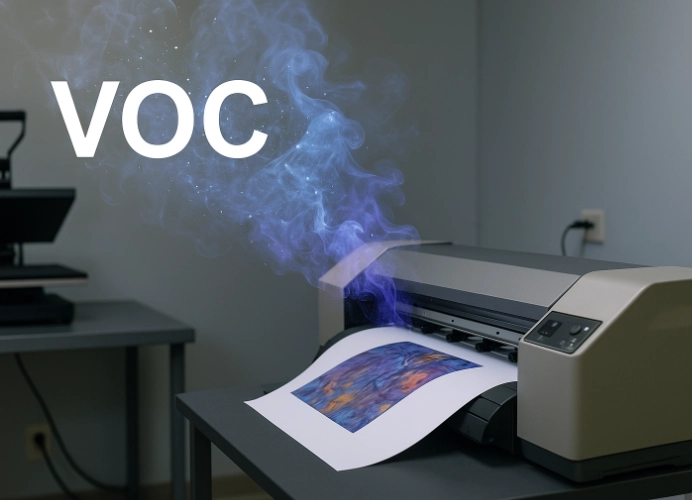
- Volatile Organic Compounds (VOCs)
These are the most common substances found in screen printing shops. VOCs are organic compounds that easily evaporate at room temperature. These chemicals, which cause strong odors, can accumulate in the body if inhaled daily without proper chemical filter masks. They can affect the respiratory system and nervous system, cause skin irritation, or dizziness.
Sources:
- Plastisol Ink: Contains plasticizers and solvents that emit vapors, especially when heated during the curing process.
- Screen Cleaning and Preparation Solutions: Products like reclaimers, degreasers, or screen openers all contain harsh chemicals that easily evaporate.
- Other Types of Ink: Even some water-based inks may contain ammonia or other chemicals.
Short-term effects may include dizziness, headaches, eye irritation, and sore throat, while long-term effects can damage the lungs, liver, and central nervous system.
- Dust and Particulates
These small particles can remain suspended in the air for long periods and easily accumulate in the lungs.
Sources:
- DTF Adhesive Powder: The primary source of dust in the DTF process. The powder is very fine and easily disperses when sprinkled and excess powder is knocked off.
- Lint: Fibers from cotton t-shirts or other fabrics that float up during printing preparation.
- Emulsion Flakes: Dry film particles that flake off during cleaning or screen washing.
These can cause respiratory irritation, allergies, and if they are very small (PM2.5), they can enter the bloodstream, posing long-term risks of chronic obstructive pulmonary disease.
- Chemical Mists/Aerosols
These are small liquid droplets that form when sprayed and float in the air.
Sources:
- Platen Adhesive Spray: Used to secure garments in place, this is a common source of chemical mists that are easily inhaled.
- Cleaning Sprays: Cleaning solutions in spray form.
These can cause similar effects to inhaling vapors but can enter the lungs directly and more quickly.
Why Cloth Masks or Regular Surgical Masks Are “Not Enough”
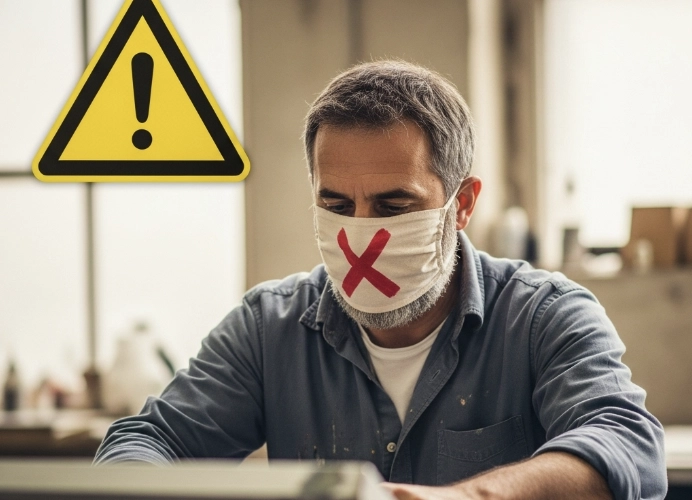
Many screen printers may think that wearing cloth masks or green surgical masks is sufficient, but this is not the case. These masks are designed primarily to filter large particles, such as droplets from coughing or sneezing. They cannot prevent volatile organic compounds (VOCs) or filter out tiny particles like DTF powder. Wearing the wrong type of mask is like having no protective gear at all for your health.
Choose the right piece of armor, select the right mask for a screen printer
When choosing a mask, the type of work being done is the primary consideration. There are two main types of masks suitable for screen printers:
- Particulate Respirator - such as N95
Function: Filters 95% of particles in the air (for N95), but cannot protect against oil-based or chemical vapors.
Suitable for:
-
DTF process: Especially for screen printers working with DTF powder adhesive, suitable for preventing DTF dust. Choose a model with a breathing valve to reduce heat buildup.
-
Work involving large amounts of fabric dust, such as preparing large batches of clothing, sanding, or cleaning screen blocks that generate dust.
Limitations of the mask: Cannot protect against ink vapor or screen block cleaning solutions.
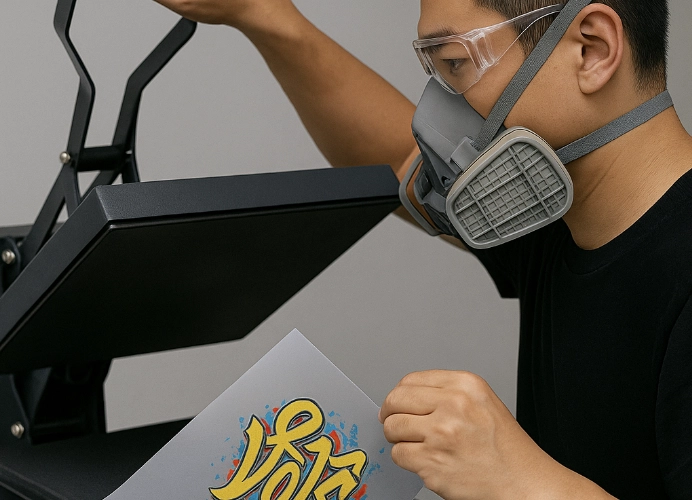
- Chemical Cartridge Respirator
This is the “real deal” for most screen printers, being either a half-face or full-face mask that requires the use of a “cartridge.” These masks have specific filters and are suitable for shops that print all day or have multiple machines running simultaneously.
Function: Air is drawn through the cartridge, which contains activated carbon or other chemicals that trap chemical vapors before they are inhaled.
Choosing the cartridge:
-
Organic Vapor Cartridge (OV): Black cartridges that are standard for screen printing work, protecting against vapor from solvents in most inks and cleaning solutions.
-
Particulate Pre-filter: For maximum safety, a particulate pre-filter (round filter) should be placed over the OV cartridge, making your mask capable of protecting against both vapor and dust simultaneously (all-in-one).
Importance of Proper Fit (Fit Test): A mask is completely ineffective if air leaks in. Ensure the mask fits snugly to the face. A thick beard may prevent a proper seal and reduce effectiveness.
What type of job…what mask to use?
Screen printing (Plastisol/Solvent ink) involves chemical vapor (VOCs), so a chemical protection mask + OV cartridge (black) should be used.
Working with DTF powder adhesive involves small dust particles, so an N95 mask or a chemical protection mask + dust filter should be used.
Heat curing ink involves chemical vapor (VOCs), so a chemical protection mask + OV cartridge (black) should be used.
Cleaning screen printing blocks (using strong chemicals) involves chemical vapor and mist, so a chemical protection mask + OV cartridge + chemical protection goggles should be used.
Spraying adhesive on printing plates involves chemical mist and vapor, so a chemical protection mask + OV cartridge + dust filter should be used.
General fabric preparation work (lots of dust) involves fabric dust, so an N95 mask should be used.
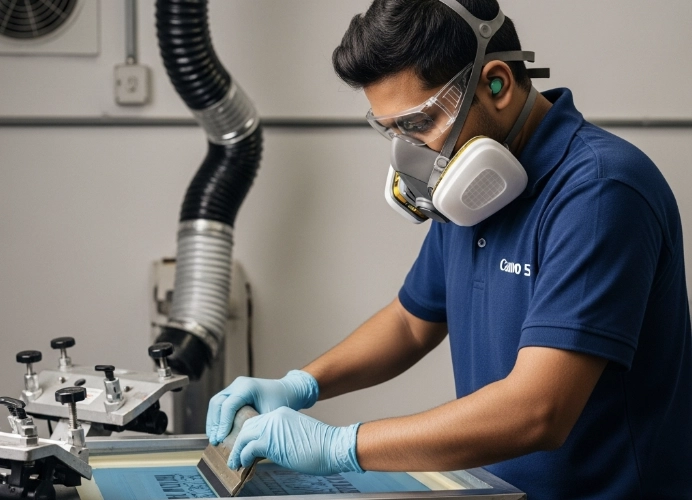
How to use masks safely and effectively?
Masks also require maintenance. First, replace filters according to the schedule; don’t wait until the smell becomes strong or breathing becomes difficult. Always replace filters according to the manual. Additionally, clean the mask daily because dust can accumulate around the nose clip or straps. The principle is to clean with alcohol or warm water.
After use, store the mask in a dust-proof box to extend the filter’s life and prevent dust accumulation when not in use. Wearing the mask loosely or incorrectly can allow dust to enter unnoticed.
New employees should be trained on how to wear masks correctly.
Beyond the mask, what other systems should a screen printing shop have?
The mask is merely the last line of defense; equally important is reducing risks at the source.
A screen printing shop should have a good ventilation system, which is the most crucial element. Use exhaust fans to draw out ink fumes and dust from the workspace directly, and install ventilation fans in the printing room.
Ink and other chemicals should always be stored with their containers tightly sealed when not in use, and masks should be kept in sealed bags to extend the life of the filters.
Choose inks and powders that meet RoHS standards and are free from harmful substances.
As a screen printer, skills and craftsmanship are invaluable assets that can be leveraged to build a career, but good health is the foundation that allows you to use these skills to create work over the long term. Therefore, invest in appropriate chemical protection masks for your work, check your masks and ventilation systems starting today, so that you can stand firm in the screen printing industry and continue to create excellent work for years to come.
Ready to Print Custom DTF with Screen168 Bangkok?
Single pieces to bulk wholesale. Free artwork file check and instant online pricing 24/7.
🚀 View Sizes, Prices & Order Online→