
Teflon Sheet vs Wax Paper: What's the Difference and Which One to Choose for DTF Printing?
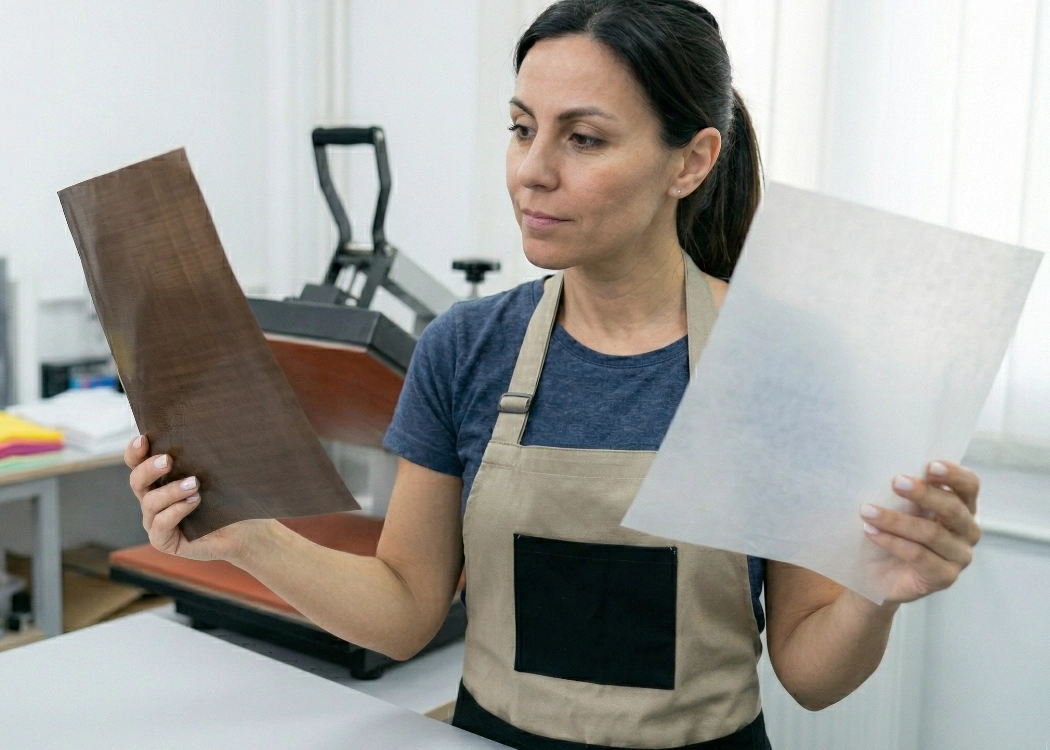
For DTF T-Shirt Printers: Understanding Heat Press Materials
For DTF (Direct to Film) T-shirt printing operators, it is well known that the quality of the print is not solely determined by the printing machine or ink quality. The final step, the “heat pressing” process, is crucial in ensuring the longevity and aesthetic appeal of the print. During the post-press heat pressing process, a critical component is the “heat press material.”
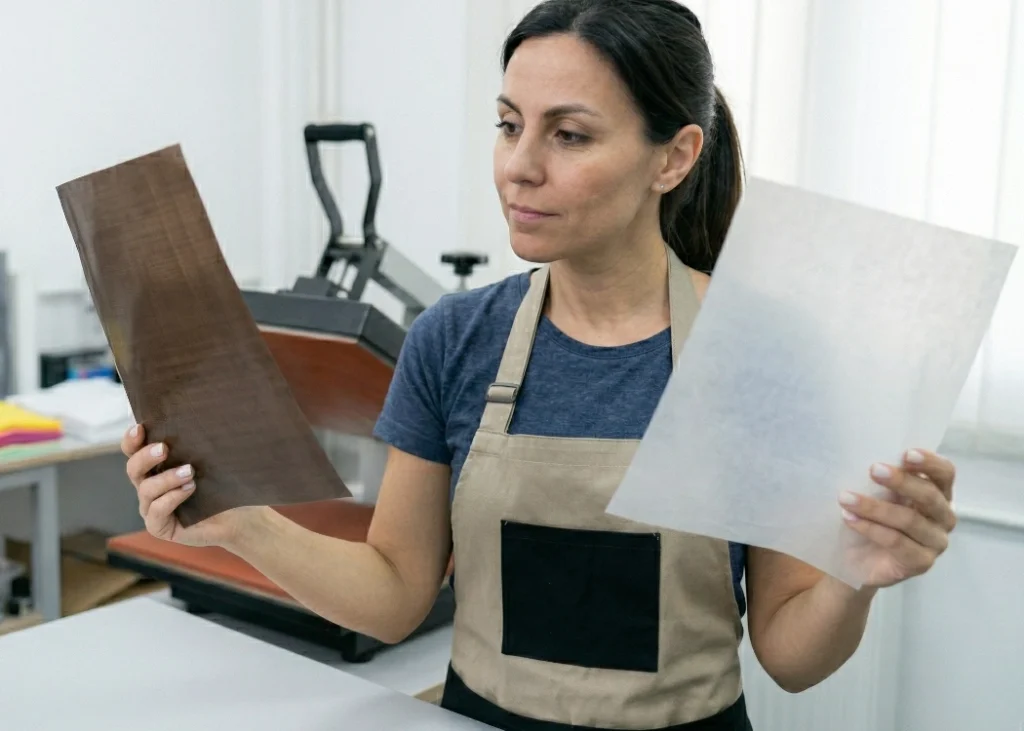
In the T-shirt printing industry, two popular materials are used for heat pressing: Teflon sheets and parchment paper. Many people wonder if these two materials serve the same purpose and whether they can be used interchangeably. This article delves into the differences and their impact on the final print quality.
Understanding Teflon Sheets
Teflon sheets used in printing are fiberglass sheets coated with PTFE, providing high heat resistance (typically over 260°C) and a smooth surface that prevents dirt and adhesive from sticking.
Benefits of Using Teflon Sheets
- Durability: Teflon sheets are highly durable and can be cleaned and reused hundreds or even thousands of times.
- Heat Distribution: They help evenly distribute heat from the heat press to the film and fabric.
- Adhesive Prevention: They prevent hot-melt adhesive powder from sticking to the heat press surface, which could damage subsequent prints.
Observations with Teflon Sheets
- Finish: The semi-gloss finish of the print can be both an advantage and a disadvantage. The texture of the fiberglass mesh may be visible on the print, which some may find undesirable.
Understanding Parchment Paper
The parchment paper used in printing is not the same as wax paper or baking parchment. It is a silicone-coated paper that can withstand heat up to around 200-220°C and prevents adhesives from sticking.
Benefits of Using Parchment Paper
- Matte Finish: The primary reason premium print shops choose parchment paper is the matte finish it provides, which makes the DTF print blend seamlessly with the fabric, giving it a premium look.
- Cost-Effective and Easy to Obtain: Parchment paper is readily available in supermarkets and bakeries.
- Moisture Absorption: In cases where the fabric is damp, parchment paper can absorb moisture better than Teflon sheets.
Observations with Parchment Paper
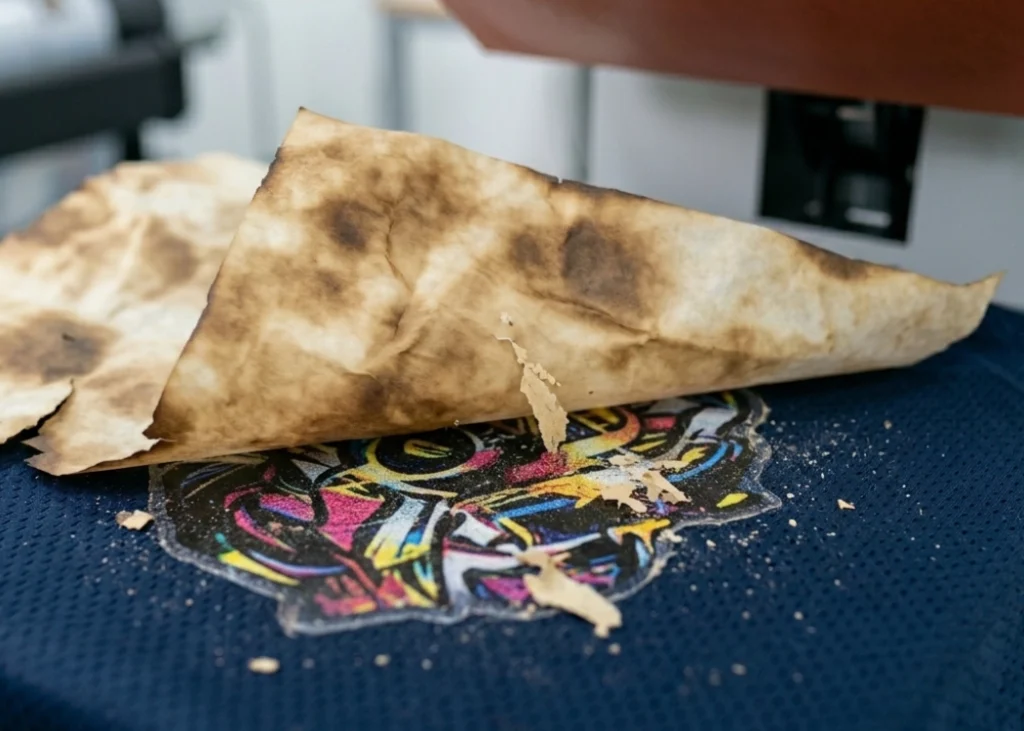
- Short Lifespan: A single sheet of parchment paper can only be reused about 5-10 times before it starts to brown, become brittle, and may leave paper residue on the print.
Head-to-Head Comparison: Which One to Choose?
The choice between Teflon sheets and parchment paper depends primarily on the desired “finish” of the print:
- For Quick, Cost-Effective Prints: Use Teflon sheets for high-volume shops that do not require frequent material changes and where customers are not concerned about the glossiness of the print.
- For Premium, Matte Prints: Use parchment paper for fashion brands that require a smooth, soft, and non-reflective finish.
There is no right or wrong choice in selecting Teflon sheets or parchment paper for DTF T-shirt printing. Both materials have their advantages and limitations. As a printer, understanding the properties of these materials is key to maximizing the potential of DTF printing and meeting market demands while ensuring customer satisfaction.
Ready to Print Custom DTF with Screen168 Bangkok?
Single pieces to bulk wholesale. Free artwork file check and instant online pricing 24/7.
🚀 View Sizes, Prices & Order Online→