
Can You Use DTF Printing on Nylon? Heat Press Tips to Prevent Fabric Damage
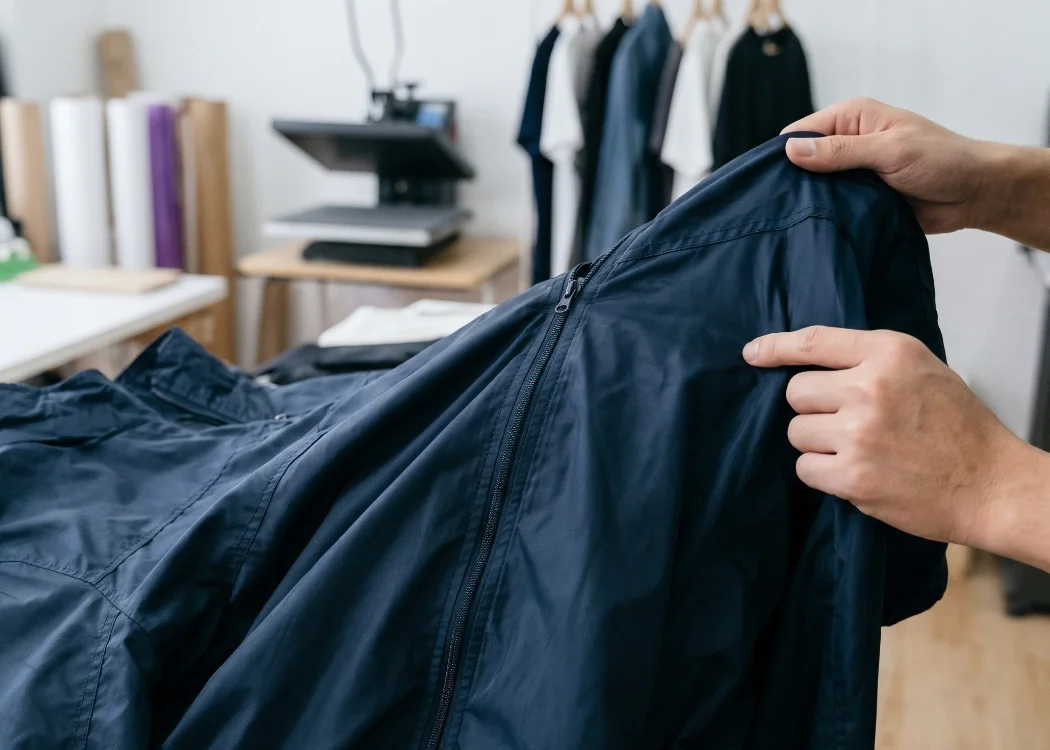
In the T-shirt printing industry, choosing the right type of fabric is an important factor that determines the printing techniques and production processes used. Cotton and polyester are familiar materials that most printing professionals can handle relatively easily. However, when your business receives T-shirt printing orders involving nylon fabric, such as windbreakers, jackets, sportswear, or fabric bags, issues like shrinkage, wrinkles, and shiny heat marks can become significant challenges.
One of the most frequently asked questions is: Can you use DTF printing on nylon? The answer is “Yes,” but selecting suitable materials and heat press settings is essential. Some nylon fabrics are sensitive to heat and have surface coatings that affect adhesive bonding. This article explores DTF printing on nylon, including temperature control, pressure settings, and heat pressing techniques to prevent fabric deformation, print peeling, and other potential production damage.
Understanding Nylon Fabric and the Challenges of T-Shirt Printing
Nylon is a synthetic fiber belonging to the polyamide family. Its outstanding properties include strength, lightweight construction, abrasion resistance, and high durability. These characteristics make nylon popular for outdoor clothing, windbreakers, sportswear, bags, and umbrellas. Some nylon fabrics also undergo surface treatments to improve water resistance or water repellency.
However, these properties create challenges for T-shirt printing, especially DTF printing, which requires heat and pressure to bond printed designs to fabric.
The main challenges of DTF printing on nylon include:
- Heat Sensitivity: Some nylon fabrics may shrink, wrinkle, or deform when exposed to high temperatures, particularly around 140–160°C. However, this depends on the fiber type, fabric construction, and surface coatings. It does not mean that all nylon fabrics melt at these temperatures.
- Water-Repellent Coating: Some nylon jackets and sportswear have water-repellent surface treatments. These coatings may interfere with DTF adhesive bonding, increasing the risk of print peeling.
- Color Migration: Certain dark-colored nylon fabrics may experience dye migration when exposed to heat. This can cause white or light-colored prints to become discolored or appear dull.
Can You Use DTF Printing on Nylon Fabric?
DTF (Direct to Film) printing is a technology that prints designs onto PET film using specialized inks and hot-melt adhesive powder. The adhesive is then cured under controlled conditions before the design is transferred onto fabric using a heat press.
One of the main advantages of DTF printing is its ability to reproduce detailed graphics, complex designs, and color gradients on various fabric types. This differs from sublimation printing, which is primarily suitable for polyester materials and surfaces designed to accept sublimation inks.
DTF printing on nylon is possible and can produce vibrant, sharp designs. However, this does not mean that every standard DTF transfer film is compatible with all nylon fabrics, particularly those with water-repellent coatings or specialized surface finishes.
The key to successful DTF printing on nylon lies in choosing appropriate adhesive powder, controlling heat press temperature, pressing time, and pressure.
Applying standard cotton T-shirt printing settings to nylon without testing may cause fabric deformation, shiny heat marks, or poor print adhesion.
Why Can DTF Printing on Nylon Cause Fabric Deformation and Heat Marks?
Heat presses used for conventional DTF printing may operate at approximately 150–160°C for 10–15 seconds, depending on the transfer film, adhesive, and manufacturer’s specifications. These temperature ranges are commonly used in various cotton T-shirt printing applications.
However, such temperatures may be too high for certain nylon fabrics, especially lightweight nylon or materials with surface coatings.
Excessive heat can alter the fabric fibers or structure, causing puckering, shrinkage, or shiny heat marks.
When excessive pressure is applied simultaneously, rectangular impressions may appear along the edges of the transfer film or heat press platen. This problem is particularly noticeable on lightweight jackets with smooth fabric surfaces.
Some types of heat damage may be permanent. Therefore, testing heat press conditions on fabric samples before production is an essential step for professional T-shirt printing businesses.
Heat Control Tips and Techniques for DTF Printing on Nylon
To achieve high-quality DTF printing on nylon, ensure proper adhesion, and reduce the risk of fabric damage, printing professionals should carefully select compatible materials and adjust heat press settings.
The following techniques are particularly important.
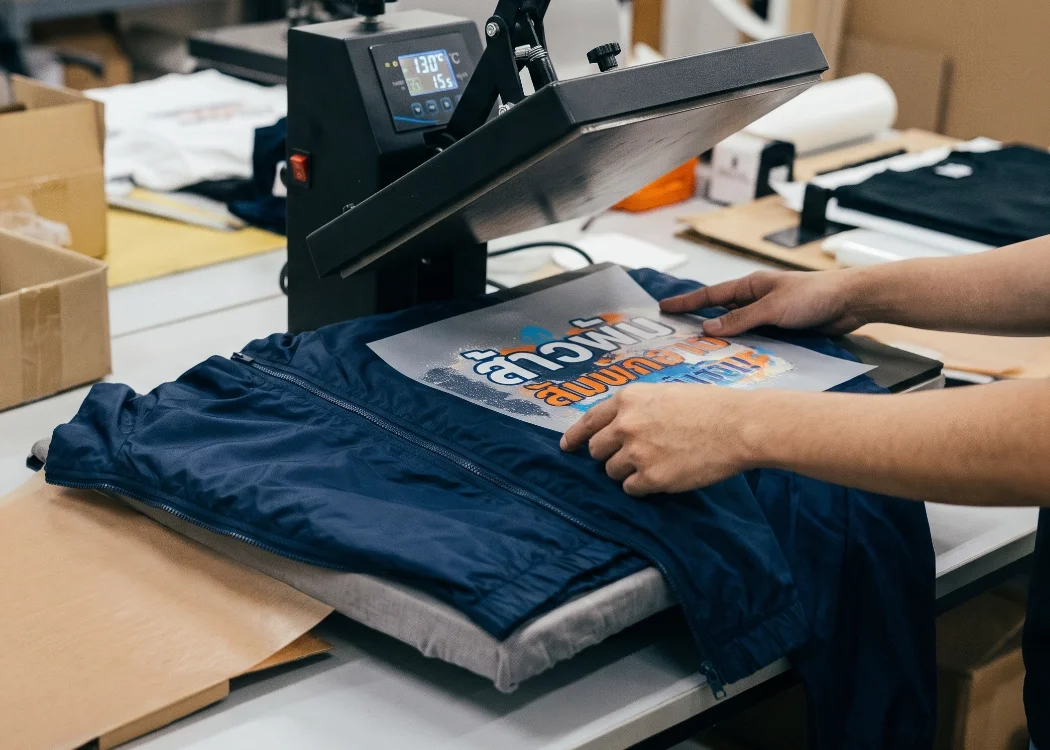
1. Adjust the Temperature to Match the Fabric and Adhesive System (Low-Temperature Heat Press)
The main principle of nylon T-shirt printing is to avoid unnecessarily high temperatures, especially when working with lightweight fabrics or materials with surface coatings.
Some low-temperature DTF systems can operate at approximately 125–135°C, while others may require higher temperatures, such as 138–145°C, depending on the adhesive formulation and manufacturer’s requirements.
In certain cases, lowering the temperature may require increasing the pressing time to approximately 15–20 seconds.
However, pressing time should not be increased automatically because prolonged heat exposure can also damage nylon fabrics.
Important Note: The temperature range of 125–135°C is not a universal standard for all nylon fabrics. Before production, always test the compatibility of the DTF transfer film, adhesive powder, and actual fabric. Check both adhesive bonding and changes in fabric appearance. Some nylon fabrics require specialized adhesives, while water-repellent materials may not be compatible with conventional DTF transfers.
Furthermore, the heat press settings mentioned in this article are general guidelines only. They cannot guarantee results with every heat press machine, DTF transfer film, or adhesive powder brand. Businesses should test their actual materials and equipment before beginning commercial production.
2. Choose Low-Melt DTF Adhesive Powder
DTF adhesive powders are available in different formulations and grades, each with different melting characteristics, bonding properties, and flexibility.
For DTF printing on nylon, consider using Low-Temperature DTF Powder or adhesive powder specifically identified by the manufacturer as compatible with nylon fabrics.
Some adhesive powders may begin melting at approximately 120°C. However, it is important to understand that the melting temperature is not necessarily the same as the recommended heat press application temperature.
Proper adhesion also depends on pressing time, pressure, and fabric surface properties.
When printing on dark-colored nylon, consider using adhesive or printing systems specifically designed to reduce dye migration.
Some black DTF adhesive powders may provide anti-migration properties, but not all black powders offer this protection. Always check the manufacturer’s product specifications before use.
3. Pre-Pressing Techniques and Managing Water-Repellent Coatings
Some nylon jackets and bags have DWR (Durable Water Repellent) coatings that help prevent water droplets from penetrating the fabric.
However, these coatings may make it more difficult for DTF adhesive to bond with the fabric surface.
Before starting DTF printing, consider the following preparation steps:
- Pre-Pressing: If permitted by the material manufacturer, pre-press the fabric for approximately 2–5 seconds to help remove moisture and reduce wrinkles. Use a temperature suitable for the fabric and always test beforehand.
- Check Surface Coatings: If the fabric has a water-repellent or specialized protective coating, consult the fabric manufacturer or DTF adhesive supplier to confirm compatibility.
Using rubbing alcohol to remove water-repellent coatings is not recommended as a standard procedure.
Alcohol may damage the coating, alter the fabric color, or affect the product’s water-repellent properties. It also does not guarantee improved adhesive bonding.
If the coated fabric is incompatible with conventional DTF transfers, consider using transfer materials specifically designed for nylon or coated fabrics.
4. Use a Teflon Sheet to Protect the Fabric Surface
Using a Teflon sheet or heat-resistant parchment paper is another technique that may help reduce surface marks on nylon fabrics.
These protective materials create a barrier between the heat press platen and the garment, reducing direct contact, preventing ink or adhesive from sticking, and potentially minimizing certain types of shiny heat marks.
However, a Teflon sheet does not automatically protect fabric from excessive heat.
It can also affect heat transfer to the adhesive layer.
Therefore, always follow the DTF transfer film manufacturer’s recommendations regarding protective sheets, pressing temperature, and application time.
Do not increase the temperature simply because a Teflon sheet is being used.
5. Adjust Heat Press Pressure Appropriately
Some beginners believe that applying more pressure always produces stronger print adhesion.
In reality, the appropriate pressure depends on the adhesive formulation and fabric structure.
For lightweight nylon fabrics, excessive pressure combined with heat may cause permanent impressions, shiny marks, or fabric deformation.
Some nylon-compatible DTF systems recommend light-to-medium pressure, while others require higher pressure to achieve proper adhesive bonding.
Always follow the material manufacturer’s recommendations and test to ensure sufficient adhesion without damaging the fabric.
If the garment has seams, zippers, or buttons near the printing area, position them outside the heat press platen whenever possible. Alternatively, use suitable pressing pads to help distribute pressure evenly.
6. Choose the Correct Peeling Method (Hot Peel / Cold Peel)
The peeling process affects DTF print quality, especially on smooth surfaces such as nylon.
DTF transfer films are available in several types, including Hot Peel, Warm Peel, and Cold Peel. Each type is designed to be removed under different temperature conditions.
When using Cold Peel film, allow the transfer to cool for the period specified by the manufacturer before removing it. This helps prevent the printed design from lifting with the film or developing uneven edges.
However, if the transfer film is designed for Hot Peel, it can be removed while still hot according to the manufacturer’s instructions, without waiting for it to cool completely.
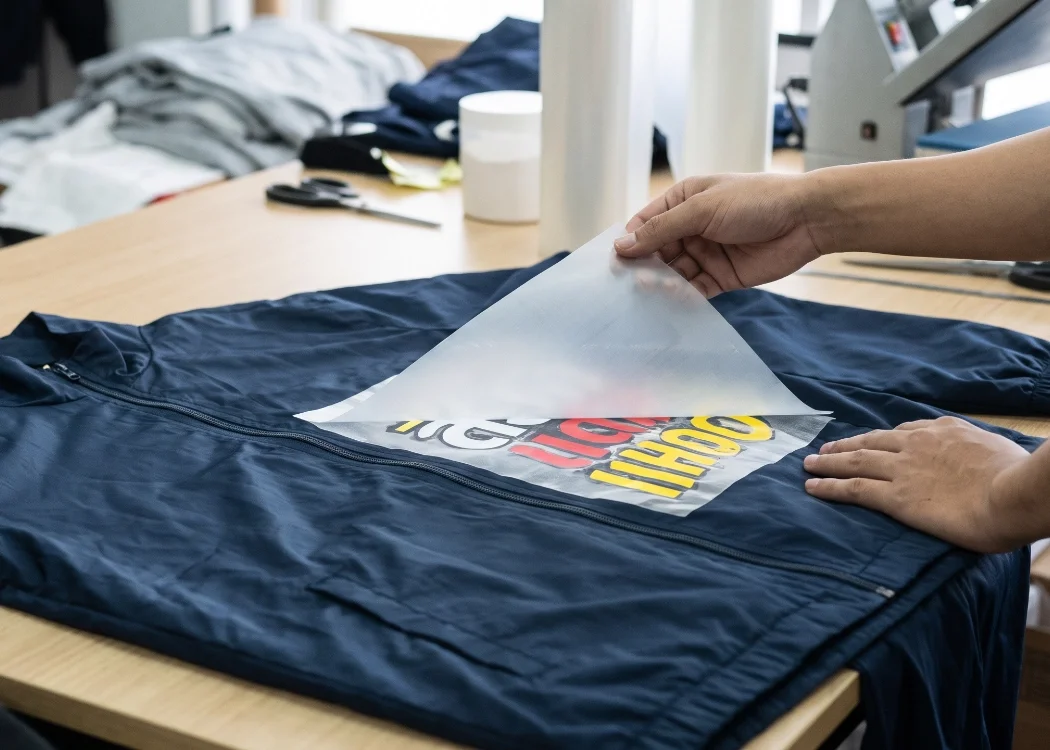
The important point is that DTF printing on nylon does not always require Cold Peel. The correct peeling method depends on the specific transfer film and adhesive system.
7. Post-Pressing for Improved Durability
After removing the DTF transfer film, some printing systems recommend an additional pressing step, known as Post-Pressing, to improve adhesion and adjust the surface texture of the print.
This process may involve placing a Teflon sheet or suitable parchment paper over the design before pressing again at the manufacturer’s recommended temperature and duration.
Some low-temperature DTF systems may require approximately 3–10 seconds of additional pressing.
However, settings such as 130°C for 5–10 seconds should not be applied to every nylon fabric without testing.
Post-pressing increases the total heat exposure of the garment. If the fabric is highly sensitive to heat, additional pressing may cause shiny marks or shrinkage.
Therefore, Post-Pressing should only be performed when recommended by the transfer film and adhesive manufacturer. Use the shortest pressing time that still meets the material’s adhesion requirements.
Benefits of Offering DTF Printing on Nylon Fabric
If you can properly control heat and select compatible materials for DTF printing on nylon, adding nylon printing services may help expand your business opportunities and the range of products you can offer.
- Increased Product Value: Windbreaker jackets, premium umbrellas, and camping bags often have higher product values than basic T-shirts. Offering custom logo or graphic printing on these materials may create additional revenue and profit opportunities.
- Multicolor Printing Capabilities: DTF printing can reproduce multicolor graphics and gradients without requiring separate printing screens for each color. This makes it suitable for corporate logos, sportswear, and fashion designs with intricate details.
- High Print Sharpness: Some nylon fabrics have relatively smooth surfaces with minimal lint, allowing DTF prints to display fine details clearly. However, the final appearance and durability still depend on the transfer film, adhesive quality, and bonding performance.
How to Care for Nylon Garments With DTF Prints
Providing proper garment care instructions is an important part of professional after-sales service.
This is especially important for printed nylon clothing, where both the durability of the design and the original properties of the fabric must be maintained.
Recommended care instructions include:
- Turn Garments Inside Out Before Washing: Always turn jackets or sportswear inside out before washing to reduce friction between the printed design, washing machine drum, and other garments.
- Avoid Hot Water and High Temperatures: Wash garments in cold or room-temperature water according to their care labels. Avoid high-temperature tumble drying. If unsure, allow garments to air dry in a shaded, well-ventilated area.
- Never Iron Directly Over the Print: If ironing is necessary, turn the garment inside out or use a suitable protective cloth according to the manufacturer’s recommendations. Choose a temperature appropriate for nylon fabric.
For jackets with water-repellent coatings, always check the garment manufacturer’s care instructions because washing and heat exposure may affect the protective surface treatment.
Conclusion
DTF printing on nylon is possible and can produce high-quality results when the fabric’s properties are understood and suitable materials are selected.
The most important factor is not simply using the lowest possible temperature, but finding the right balance between temperature, pressing time, pressure, adhesive powder, and peeling method to achieve reliable print adhesion without damaging the fabric.
Choosing nylon-compatible DTF adhesives, checking surface coatings, and conducting tests before production can help reduce the risk of fabric shrinkage, shiny heat marks, and print peeling after washing.
For T-shirt printing businesses, learning how to work with different fabric types can create opportunities to accept more orders and reach new customer segments, from fashion T-shirts and sportswear to custom nylon jackets and bags for corporate clients.
Ready to Print Custom DTF with Screen168 Bangkok?
Single pieces to bulk wholesale. Free artwork file check and instant online pricing 24/7.
🚀 View Sizes, Prices & Order Online→